
CULTURESET X: THE ROAD TO 2030
WHY THIS MATTERS
Six generations isn't just a diversity statistic, it's an operational problem
A workforce spanning sixty years of birthdays is also a workforce spanning six quite different sets of assumptions about what a job actually is: how feedback should be delivered and how often, whether a career is supposed to be a ladder or a portfolio, what counts as a reasonable notice period or a reasonable salary or a reasonable thing to ask of somebody on a Sunday evening.
Most of our people policies were written with one of those groups in mind and then quietly applied to everybody else. That holds up fine until you find yourself trying to retain a 24-year-old and a 64-year-old using the same benefits package, the same progression framework and the same induction slide deck, and wondering why neither of them seems especially convinced.
The knowledge walking out of the door doesn't appear on anybody's risk register
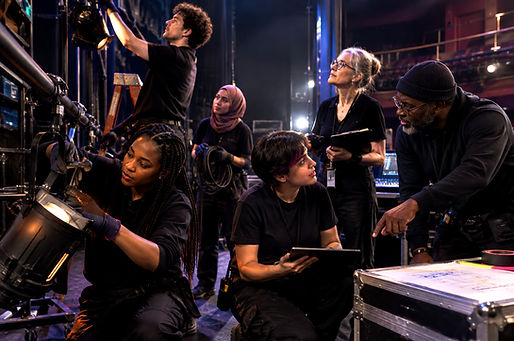
Think about what your organisation actually knows, and then think about where that knowledge physically lives. Conservation technique. How to coax a lighting rig that's older than the technician maintaining it. Which officer at the council will actually pick up the phone. Thirty years of hard-won instinct about which funder says yes to what, and how to phrase it so they do. A great deal of that sits in the heads of people who are within a decade of retiring, and almost none of it has ever been written down.
At the same time, the fluency our organisations most urgently need — AI tools, platform-native audience building, accessibility technology — tends to sit with the people we pay the least and promote the slowest. There is an obvious and rather elegant trade available here, and remarkably few organisations have got round to making it on purpose.
Technology isn't just changing our tools, it's changing which jobs exist at all
Some of the roles we'll be recruiting for in 2030 don't have names yet, and some of the ones we're recruiting for today won't survive the decade in their current shape. In the meantime we are still assessing candidates against job descriptions that were written before generative AI showed up as a line item in anyone's budget, which is a bit like hiring for a job that has already quietly changed underneath us.
This lands differently in our sector than it does elsewhere. We are being asked to adopt tools built on creative work while simultaneously defending the value of creative labour, and our own staff hold strong, sincere and genuinely irreconcilable views about that. Deciding not to have the conversation is a choice, and it isn't a workforce strategy.
Your audience has six generations in it too, and that's the part we keep missing
Gen Alpha are the audience of the 2030s, and their Millennial parents are the ones buying family tickets right now. Gen Z aren't discovering your work through the season brochure, whatever the season brochure budget suggests we believe. And the Boomers who make up a substantial share of your current paying audience are not, as it turns out, immortal.
A team drawn largely from one generation will tend to programme for that generation, mostly without meaning to. It's the same failure we already recognise and talk about openly when a team doesn't reflect the community around it. We've simply never said it out loud about age. The organisations still selling tickets in 2030 will be the ones who worked out that their staffing decisions and their audience strategy were always the same conversation.